AI answer engines are good at saying what your brand is. They are much less reliable at saying who it is for, and when they lack a fact, they supply one. The fix is plain and within your control: write down who you serve, say it simply, and repeat it everywhere.
We build an AI marketer, so we have a stake in this.
What the study looked at
On 5 November 2026, Search Engine Land published a study by Emma Baker. It scored about 2,000 brand mentions across four AI engines: Google AI Overviews, Microsoft Copilot, Perplexity and ChatGPT. The test category was dental practice management software, with five brands and 37 buyer-style questions.
Treat it as one niche, tested once. The author did not test fixes, and the page carries promotions for an AI visibility product. Even so, the patterns are worth your attention. The author says any B2B brand with a defined customer and known competitors could run the same audit.
What the engines got right, and what they did not
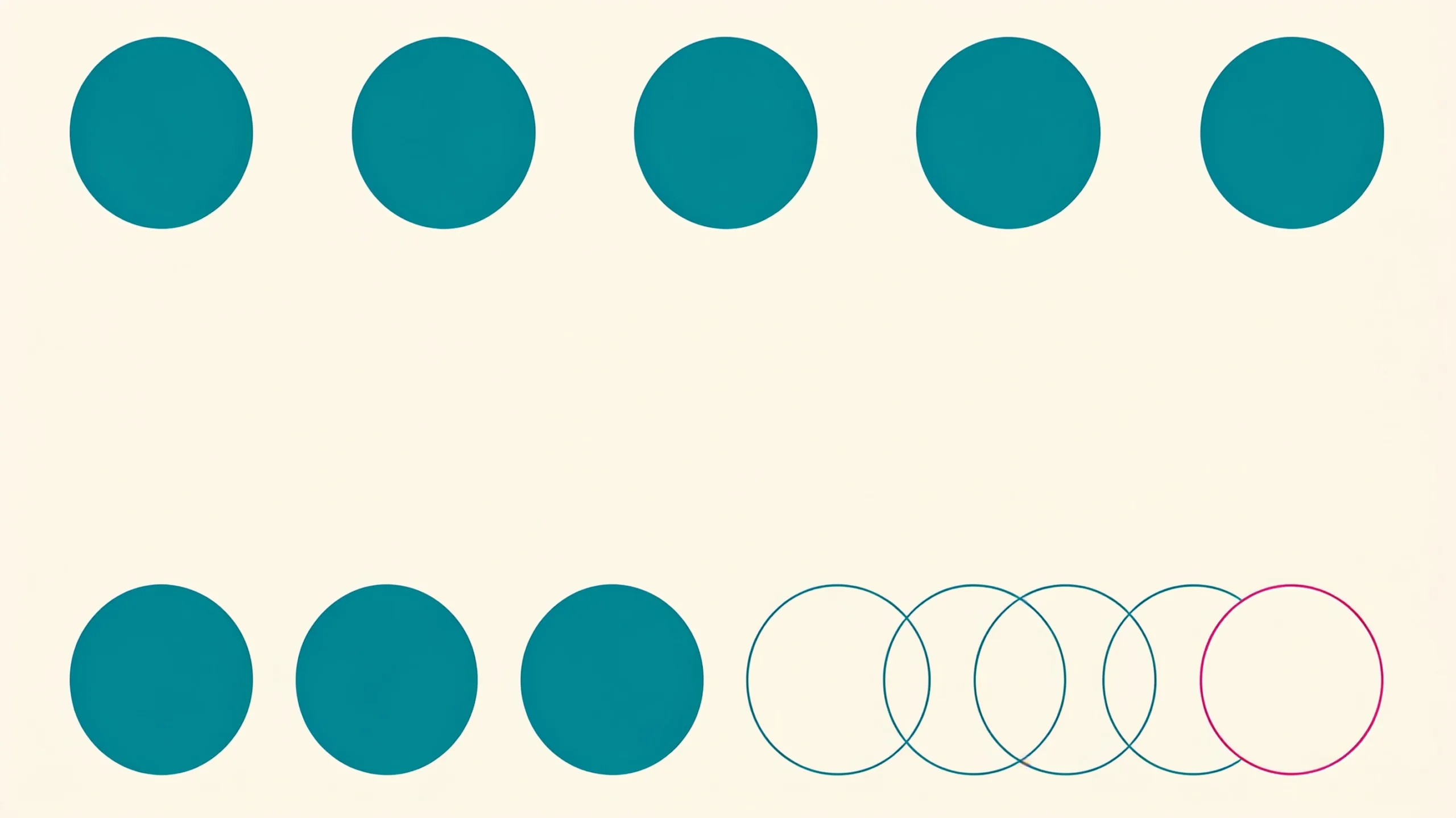
Category was almost always correct. Errors appeared in fewer than 1% of full brand descriptions. Who the product was for was correct in only 60% of scored responses.
When buyers asked about practice size, the engines often built their own sorting system instead of using each brand’s stated customers. The brand with the narrowest customer definition was described correctly most often, in roughly four out of five answers on size questions. Brands serving a mix of customers were often squeezed into one slot.
A gap becomes a guess

This matters because a buyer rarely sees what an engine left out. In the study’s opening example, one brand was built for Canadian dental practices. No engine named it when asked about Canadian dentists.
In the study, 34% of scored outputs contained at least one invented fact. Pricing was the biggest source. There were 223 mentions with a price the author could not verify, and Copilot wrote 153 of them.
One brand that does not publish prices had its monthly cost stated in several different ranges. Publishing helped but did not fix everything. Another brand that does publish prices still had at least six versions quoted, and one traced back to a third-party directory.
Proof rarely made it through
Half of the full brand descriptions included no proof at all, and only 14% earned full credit. Statistics in homepage blocks almost never appeared. A one-line claim from a press release did, and in one case it was credited to the wrong product.
The author’s reading is that plain, quotable sentences travel better than headline numbers. That is a reasonable hypothesis rather than a tested result.
An audit you can run this week
You do not need any particular tool for this. A spreadsheet and an hour will do.
- Write your ground truth in five lines: category, who it is for, what you promise, what makes you different, and proof you can quote.
- Ask three or four AI assistants the questions a buyer would ask, including “best for a business like this one”. Save the answers.
- Mark each error by type: brand missing, wrong customer, or invented fact. They need different fixes.
- Where an engine invented something, publish the missing fact. If you will not publish a number, publish the rule, such as “pricing depends on team size and brands managed”. The study reports that engines repeated sentences like that.
- Ask each question more than once and repeat the audit next month. The study found brand presence changed between runs of the same prompt about a third of the time.
- Name one owner. The author notes this work sits between SEO, product marketing and brand, so without a name it belongs to nobody.
The same problem lives inside your own team
An engine guesses your audience because you left a gap. Your writers, freelancers and agents do the same. If “who we are for” is vague, each of them fills it differently.
In Mavic, Brand DNA includes a positioning section and customer profiles for each brand. The help centre suggests a simple positioning template. It reads: for a named audience, the brand is the category that delivers a value. Unlike an alternative, we do something different. It also offers a quick test. Open a fresh chat, ask for three captions about a popular product, and see whether they read as aimed at someone specific. If not, the gap is usually in the customer profiles.
The limits matter. Brand DNA shapes what Mavic creates for you. It does not control what ChatGPT or Copilot says about you, and we do not claim it does. Nothing is published without a person’s approval, and that person still has to check the audience line.
Start with one sentence
Before you audit anything, write one sentence about who your brand is for, with a size and a type in it. Then check whether your homepage, your social profiles and your last five posts all say the same thing.
The study points the same way. The details that held up best were the ones brands stated simply and repeated everywhere. The ones that slipped were buried, conditional or left unsaid.
If they do not, an AI will not fix that for you. It will pick whichever version it found first.